👁️ What Happens If You Sleep With Eye Makeup On? Here’s What You Should Know
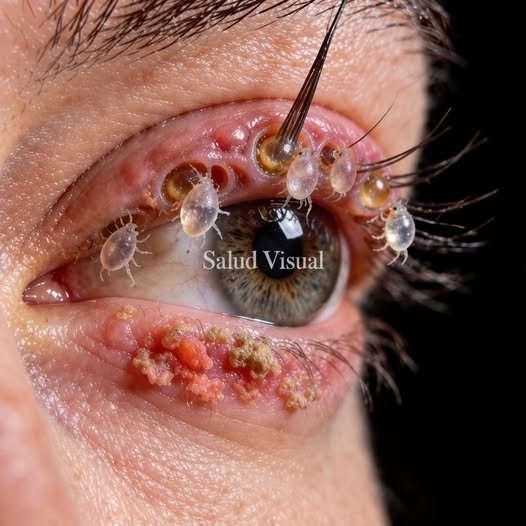
The image shows material attached around the eyelashes that resembles lash debris or infestation, but the photograph alone cannot confirm exactly what it is. Some images circulating online use dramatic pictures of eyelashes with parasites to warn people about sleeping with makeup on.
There is, however, a real reason to take eye-makeup hygiene seriously.
🧴 What Can Happen If You Sleep With Makeup On?
Leaving mascara, eyeliner or other cosmetics around the eyes overnight can contribute to irritation and inflammation of the eyelid margins, particularly if residue accumulates around the eyelashes.
It can also make it harder to distinguish ordinary cosmetic debris from conditions such as blepharitis or Demodex-associated eyelid inflammation. Demodex can cause cylindrical debris around the roots of eyelashes, along with itching, burning, crusting and irritation. EyeWiki
That doesn’t mean that sleeping with mascara automatically causes parasites.
👁️ Possible Problems Include:
1. Irritated eyes Makeup particles can get into the eye and cause redness, burning or a gritty sensation.
2. Eyelid inflammation Accumulated debris around the lashes can contribute to irritation of the eyelid margins.
3. Blocked oil glands The eyelids contain small glands that help maintain the tear film. Chronic eyelid inflammation can interfere with their normal function.
4. Eye infections Contaminated or old cosmetics can introduce microorganisms around the eye.
🦠 But Are Those Actually Lice?
This is where viral posts can be misleading.
There is a real condition called phthiriasis palpebrarum, in which pubic lice infest the eyelashes. Lice or their eggs can sometimes be visible on the eyelashes, and the condition can cause itching and irritation. CDC
However, sleeping with mascara does not cause pubic lice.
Lice are parasites that spread primarily through close person-to-person contact. CDC
So if an image claims that simply going to bed without removing mascara causes the pictured parasites, that is an exaggeration.
🧼 The Simple Habit That Really Matters
Before going to bed:
Remove eye makeup gently.
Don’t aggressively rub the eyelids.
Wash your face and eyelid area appropriately.
Don’t share mascara, eyeliner or eye makeup.
Replace old eye cosmetics according to the manufacturer’s recommendations.
Don’t use eye makeup if you have an active eye infection or significant irritation.
And if you use contact lenses, follow your lens-cleaning and replacement instructions carefully.
🚨 What If You Actually See Something Attached to Your Eyelashes?
Don’t put ordinary lice medication, insecticide, essential oils, alcohol or other household substances near your eyes.
The CDC specifically warns that standard lice medications should not be applied to the eyes. For confirmed eyelash lice, treatment is different and may involve careful removal of lice/nits and prescription ophthalmic-grade petrolatum under medical guidance. CDC
If you see insects or egg-like material firmly attached to your eyelashes—especially with persistent itching, redness, crusting or irritation—an eye doctor or healthcare professional should examine you.
❤️ The Bottom Line
Removing makeup before bed is a good habit for eye and eyelid hygiene, but don’t believe every frightening image circulating online.
The material shown in this photograph may resemble an eyelash infestation, but the image alone isn’t enough to determine what it is. Conditions such as blepharitis and Demodex can also produce debris around eyelashes. EyeWiki
If you regularly wake up with crusty eyelashes, itching, burning, redness or a foreign-body sensation, it’s worth having your eyelids examined rather than simply treating the problem as leftover mascara.
Do you always remove your eye makeup before going to bed, or have you ever accidentally fallen asleep with it on? 👁️👇
This article is for general educational purposes and is not a diagnosis or a substitute for professional eye care.