🧂 Can Two Tablespoons of Salt Really Fight Bone Pain, Diabetes, Anxiety, Depression and Constipation?
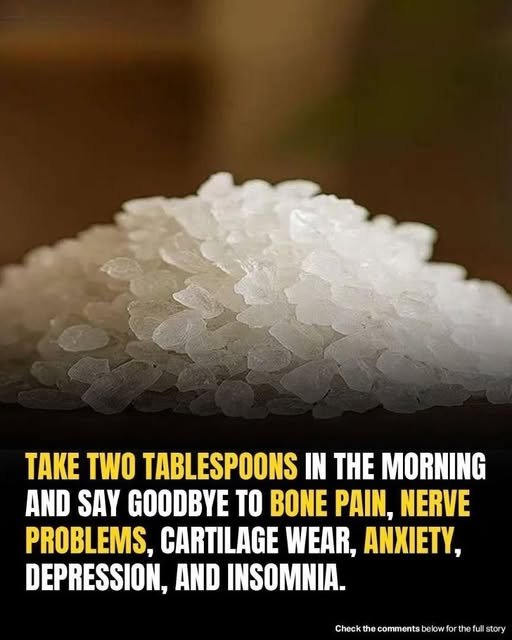
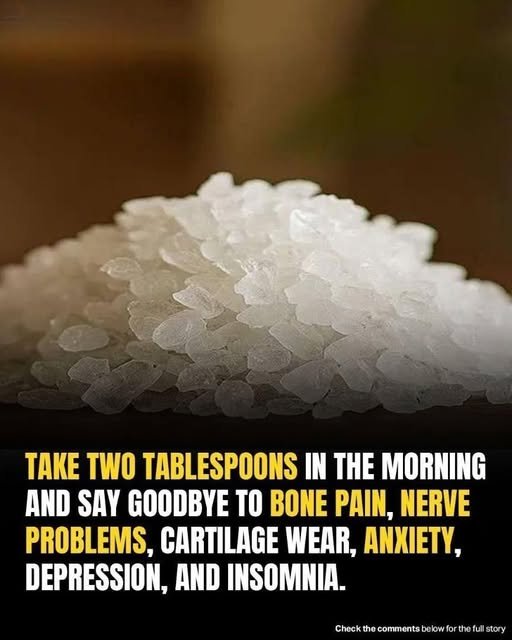
A viral post claims that taking two tablespoons of salt in the morning can help with bone pain, nerve problems, cartilage wear, anxiety, depression, insomnia and constipation.
That claim is not supported by medical evidence—and taking that much salt at once could actually be harmful.
What is the ingredient in the picture?
The image appears to show coarse salt, essentially sodium chloride. Sodium is an essential nutrient: your body needs it for fluid balance, nerve signaling and muscle function. But the amount matters. Excess sodium can raise blood pressure and increase cardiovascular risk. Actualités en Santé
❌ What about bone pain and cartilage?
There is no established treatment in which swallowing tablespoons of salt repairs cartilage or eliminates chronic bone or joint pain.
Bone and joint pain can have many causes, including arthritis, injuries, osteoporosis, inflammatory conditions and nutritional problems. The appropriate treatment depends on the cause—not simply increasing salt intake.
❌ Can salt treat diabetes?
No. Salt does not treat diabetes or replace diabetes medication, insulin, diet changes or medical care.
In fact, people with diabetes often need particular attention to cardiovascular and kidney health, and high blood pressure is an important complication/risk factor. Association Américaine du Diabète
❌ Can salt cure anxiety, depression or insomnia?
There is no evidence that taking two tablespoons of salt is a treatment for these conditions.
Interestingly, some recent observational research has found associations between higher frequency of adding salt to food and depression, anxiety or unhealthy sleep patterns. These studies do not prove that salt causes these conditions, but they certainly do not support taking large amounts of salt as a remedy. PubMed
❌ What about constipation?
Salt water is sometimes promoted online as a “flush,” but it isn’t a standard treatment for constipation.
This is the most important part of the viral post.
Do not treat two tablespoons of salt as a health supplement.
A large sodium load can increase blood pressure and cause problems with fluid balance. People with hypertension, heart disease, kidney disease or certain other conditions may be particularly vulnerable. Current U.S. guidance recommends keeping sodium below 2,300 mg per day, with an ideal limit around 1,500 mg/day for many adults, depending on individual circumstances. JACC
And remember: that daily sodium total includes the sodium already present in bread, cheese, sauces, processed foods, canned foods, restaurant meals and other foods—not just what comes from the salt shaker.
✅ What should you do instead?
If your goal is better bones and joints:
Get adequate protein and calcium.
Maintain appropriate vitamin D levels.
Do resistance and weight-bearing exercise.
Address persistent pain with a healthcare professional.
For anxiety, depression or insomnia, persistent symptoms deserve an appropriate evaluation rather than a high-dose salt remedy.
🚨 When constipation or pain needs medical attention
Don’t rely on a viral remedy if you have constipation accompanied by blood in the stool, rectal bleeding, constant abdominal pain, vomiting, fever, inability to pass gas or unexplained weight loss. These can require prompt medical assessment. Institut national du diabète et des maladies digestives et rénales
🧂 Bottom Line
Salt is an essential nutrient, but it is not a cure-all. The claim that taking two tablespoons every morning can eliminate bone pain, diabetes, nerve problems, anxiety, depression, insomnia and constipation is misleading.
A little salt in a balanced diet is normal. Taking large amounts as a daily treatment is not a medically established practice and can be dangerous.
This information is for general education and does not replace advice from a qualified healthcare professional.
Have you ever seen this salt remedy recommended online? Would you try it?