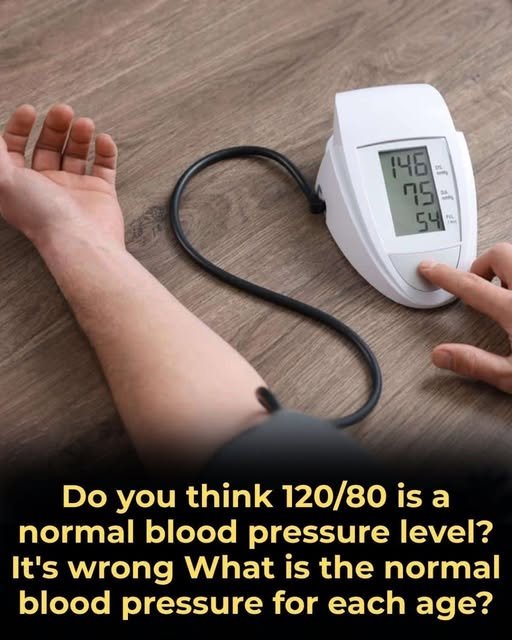
Many people believe that 120/80 mmHg is the “normal” blood pressure for everyone, but blood pressure does not have a separate official normal range for every age group. For adults, current guidelines classify blood pressure using the actual reading rather than assigning a different “normal” number to each decade of life. (www.heart.org)
Is 120/80 Normal?
120/80 mmHg is close to the commonly recognized healthy reference point, but under current American Heart Association categories, a reading of exactly 120/80 is not classified as “normal.”
For adults, the AHA categories are:
Blood Pressure
Classification
Below 120/80
Normal
120–129 and below 80
Elevated
130–139 or 80–89
Stage 1 hypertension
140 or higher or 90 or higher
Stage 2 hypertension
Above 180 and/or above 120
Severe hypertension
A single reading does not establish a diagnosis. Blood pressure can temporarily change because of stress, caffeine, exercise, illness, or other factors, so repeated properly measured readings are important. (www.heart.org)
What About Different Ages?
There is no reliable chart saying that everyone aged 20, 30, 40, 50, 60, or 70 should have a specific blood-pressure number.
For example:
Young adults: the same adult categories generally apply.
Middle-aged adults: blood pressure is assessed using the same categories, while overall cardiovascular risk is also considered.
Adults over 60 or 70: age can affect cardiovascular risk and treatment decisions, but it does not mean that a substantially higher pressure automatically becomes “normal.”
Older adults: treatment targets may be individualized according to health conditions, medications, frailty, and how well treatment is tolerated.
The 2024 European Society of Cardiology guidelines similarly define hypertension in adults as office blood pressure of 140/90 mmHg or higher, while introducing an “elevated BP” category of 120–139 systolic and/or 70–89 diastolic. (Escardio)
How to Measure Blood Pressure Correctly
For a more reliable home reading:
Sit quietly for several minutes before measuring.
Keep your back supported and both feet flat on the floor.
Rest your arm at approximately heart level.
Avoid talking during the measurement.
Take a second reading if the first is unexpectedly high.
If a reading is higher than 180/120 mmHg, wait at least one minute and measure again. If it remains that high, contact a healthcare professional. If very high blood pressure occurs together with chest pain, shortness of breath, weakness, numbness, vision changes, severe symptoms, or difficulty speaking, emergency medical care is needed. (www.heart.org)
The Bottom Line
Rather than asking, “What is the normal blood pressure for my age?”, it is more useful to look at your actual readings, repeated over time, together with your overall health and cardiovascular risk. There is no single higher blood-pressure number that automatically becomes normal simply because someone is older. (professional.heart.org)