Don’t Ignore Leg Cramps at Night: Here’s What You Should Know
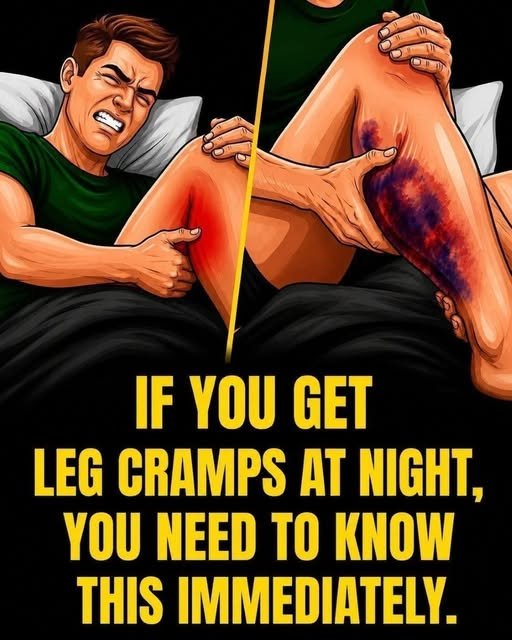
Waking up suddenly with a painful calf or foot cramp can be frightening. The muscle may become hard and tightly contracted, making it difficult to move for several seconds or minutes.
The good news is that nighttime leg cramps are common and are usually harmless. But if they happen frequently, become severe, or occur with other symptoms, they deserve attention. Mayo Clinic
What Are Nighttime Leg Cramps?
Nocturnal leg cramps are sudden, involuntary muscle contractions that occur while you’re sleeping or resting. They most often affect the calf, but the feet and thighs can also be involved.
A cramp may last from a few seconds to around 10 minutes, and the muscle can remain sore afterward. nhs.uk
Why Do They Happen?
Sometimes there is no obvious cause. Researchers believe that muscle fatigue and changes in nerve function may contribute to nighttime cramps. Mayo Clinic
This is why it’s misleading to say that nighttime cramps always mean you have a vitamin or mineral deficiency.
What Should You Do When a Cramp Starts?
When a cramp wakes you up, try these simple measures:
1. Gently Stretch the Muscle
For a calf cramp, straighten your leg and gently pull your toes toward your face. Stretching can help relax the contracted muscle. Mayo Clinic
2. Massage the Area
Gently massage the cramped muscle while stretching it.
3. Stand and Walk
If you’re able to do so safely, standing and putting weight on the affected leg may help relieve the cramp. nhs.uk
4. Try Warmth
A warm shower or bath directed toward the cramped muscle can be soothing. Mayo Clinic
Can You Prevent Night Cramps?
Some people find that regular calf stretching helps reduce the frequency of cramps. The NHS suggests regular calf stretches, including a session before bedtime. nhs.uk
Staying adequately hydrated may also help, particularly if you lose a lot of fluid through sweating. Mayo Clinic recommends adequate fluid intake while limiting excessive alcohol and caffeine. Mayo Clinic
Gentle activity before bed, such as a few minutes on a stationary bicycle, may also be useful for some people. Mayo Clinic
Does Everyone With Cramps Need Magnesium?
No.
It’s common to see social-media posts claiming that nighttime cramps automatically mean you need magnesium, potassium, or calcium. But ordinary nocturnal leg cramps aren’t necessarily caused by an electrolyte deficiency. AAFP
Don’t start high-dose supplements simply because you experience cramps. If cramps are frequent, a healthcare professional can determine whether an underlying problem or medication could be contributing.
What About Quinine?
Quinine has been shown to reduce leg-cramp frequency in studies, but it is not routinely recommended because it can cause potentially serious adverse effects and drug interactions. AAFP
It should not be taken for nighttime leg cramps without medical supervision.
When Should You See a Doctor?
Occasional cramps are generally not concerning. However, make an appointment with a healthcare professional if:
Cramps regularly disturb your sleep
They last longer than 10 minutes
You have persistent or worsening cramps
You develop numbness or swelling
You have muscle weakness
The cramps don’t improve with simple self-care nhs.uk
A healthcare professional can review your medications, medical history, symptoms, and physical examination to determine whether further evaluation is needed.
Don’t Ignore These Warning Signs
A leg cramp accompanied by significant swelling, redness, skin changes, or muscle weakness should not simply be dismissed as an ordinary cramp. Mayo Clinic
And if severe cramping continues or you develop other concerning symptoms, seek medical care promptly.
The Bottom Line
Nighttime leg cramps can be painful and disruptive, but they are usually not a sign of a serious disease. They can occur without an identifiable cause and may be related to muscle fatigue, nerve changes, dehydration, medications, or certain medical conditions. Mayo Clinic
When a cramp strikes, gentle stretching, massage, walking, and warmth may help. Regular stretching and adequate hydration may also reduce episodes for some people.
The key is to pay attention to frequency and accompanying symptoms. If cramps repeatedly wake you, become severe, or occur with swelling, numbness, weakness, or other changes, talk with a healthcare professional rather than relying on a home remedy alone.
This article is for general educational purposes and is not a diagnosis or substitute for personalized medical advice.