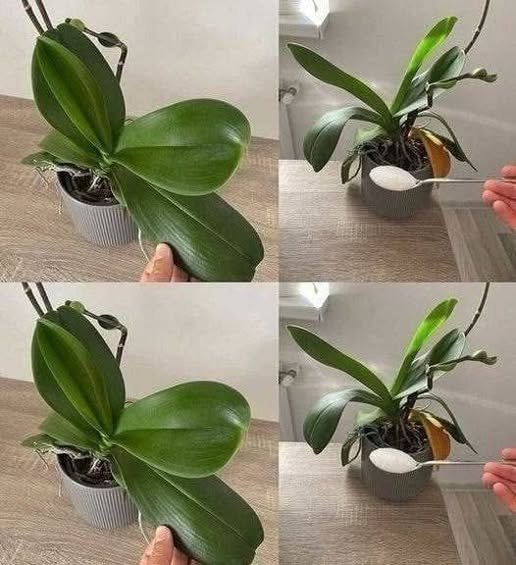
Orchids: Why a Small Amount of Fertilizer Can Make a Big Difference
Orchids may look delicate, but they can reward you beautifully when their basic needs are balanced. One of the most important lessons for orchid growers is that more fertilizer does not necessarily mean more growth or more flowers. In fact, too much fertilizer can damage sensitive roots.
The American Orchid Society recommends a gentle approach: use a fertilizer formulated for orchids and apply it at a diluted strength rather than giving the plant a strong dose all at once. (Société Américaine des Orchidées)
Why Orchids Need Fertilizer
In their natural environment, many orchids grow attached to trees and receive relatively small amounts of nutrients from rainwater, plant debris, and other organic material. They therefore do not need the same heavy feeding that some garden plants require.
Fertilizer provides essential nutrients such as nitrogen, phosphorus, potassium, calcium, magnesium, and micronutrients that support new leaves, roots, and flowers. (Société Américaine des Orchidées)
The “Weakly, Regularly” Approach
A useful principle for many orchids is “weakly, weekly.” Instead of occasionally giving a large amount of fertilizer, growers can use a much more diluted solution on a regular schedule.
The American Orchid Society notes that many experienced growers use no more than half the manufacturer’s recommended strength, while beginner guidance commonly suggests approximately one-quarter strength. (Société Américaine des Orchidées)
Always follow the instructions on your particular fertilizer because formulations vary.
A Simple Way to Fertilize an Orchid
You’ll need:
An orchid-specific balanced fertilizer
Clean water
A watering container
Steps:
Water the orchid first. Thoroughly wet the potting medium and roots.
Prepare a diluted fertilizer solution according to the fertilizer label and your orchid’s needs.
Apply the fertilizer after watering. Avoid concentrating fertilizer around dry roots.
Let excess water drain completely.
Flush with plain water regularly to help prevent mineral salts from accumulating in the potting medium. (Société Américaine des Orchidées)
Why Too Much Fertilizer Can Be Harmful
A common mistake is assuming that if a little fertilizer helps, a lot will help even more.
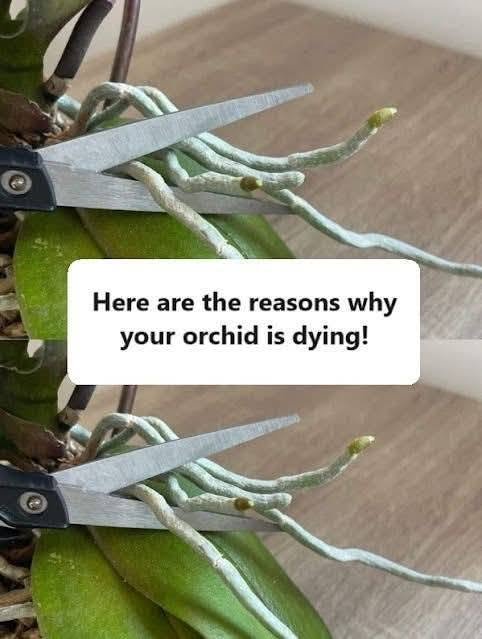
Unfortunately, excessive fertilizer can cause salt buildup, root damage, brown root tips, brown leaf tips, and eventually serious decline. The risk is particularly important when the orchid is dehydrated or when fertilizer salts are allowed to accumulate in the potting medium. (Société Américaine des Orchidées)
If you notice a white or crusty salt buildup around the potting medium, or damaged roots and leaf tips, reconsider your feeding routine and flush the growing medium thoroughly with plain water.
Fertilizer Isn’t Everything
Healthy orchids need much more than fertilizer. Light, watering, temperature, humidity, air movement, and an appropriate growing medium all play important roles.
Fertilizer is best viewed as one part of the overall care routine rather than a magic solution for flowering. (Société Américaine des Orchidées)
For orchids that naturally have a winter resting period, fertilization may need to be reduced or stopped during that period. Phalaenopsis and other continuously growing orchids can have different requirements, so the specific orchid matters. (Société Américaine des Orchidées)
Final Thoughts
When it comes to orchids, a small amount of the right fertilizer, used correctly and consistently, can be far more useful than a heavy dose.
Start conservatively, observe your plant, and adjust only when necessary. Healthy roots and good growing conditions should always come before trying to force faster growth or more flowers.
With patience and balanced care, even a modest feeding routine can help your orchid produce healthy leaves, strong roots, and beautiful blooms. (Société Américaine des Orchidées)