Traditional Hungarian Dobos Torte (Dobostorta) – Chocolate Buttercream Layer Cake
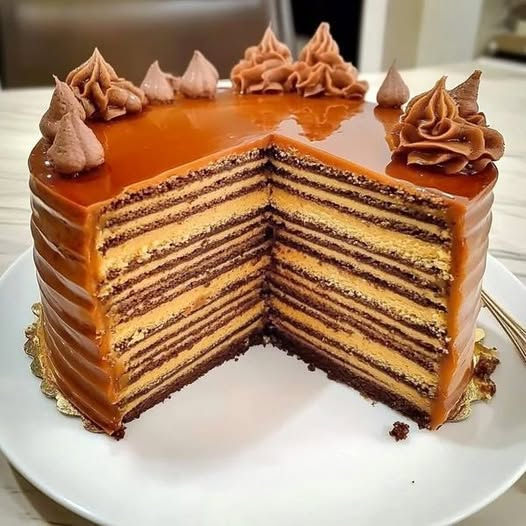
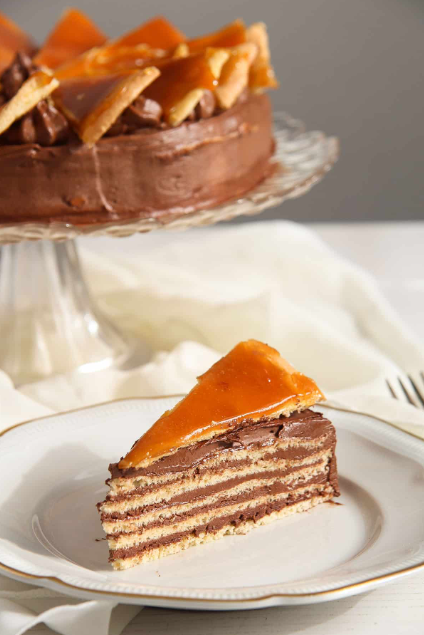
Hungarian Dobos Torte, known as Dobostorta, is one of Hungary’s most famous traditional desserts. With its delicate sponge cake layers, rich chocolate buttercream, and glossy caramel topping, this elegant cake has been a favorite in Hungarian pastry shops for generations.
The cake is named after József C. Dobos, a Hungarian confectioner who introduced it in Budapest in 1885. Its distinctive caramel topping helped protect the cake and made it more suitable for transport at a time when modern refrigeration was not widely available. <Cite refs={[“turn432334search3″,”turn432334search9”]}/>
Although the original cake requires patience and careful preparation, you can make a beautiful homemade version with familiar baking ingredients. The secret is to bake thin, even sponge layers, spread the chocolate buttercream smoothly, and prepare the caramel topping just before assembling the cake.
Ingredients
This recipe makes one 8-inch (20–22 cm) cake.
For the Sponge Cake Layers
6 large eggs, separated
¾ cup (150 g) granulated sugar
1 cup (125 g) all-purpose flour, sifted
2 tablespoons (30 g) unsalted butter, melted and cooled
1 teaspoon vanilla extract
A pinch of salt
For the Chocolate Buttercream
8 oz (225 g) dark chocolate, chopped
1 cup (225 g) unsalted butter, softened
¾ cup (90 g) powdered sugar, or to taste
1 teaspoon vanilla extract
A pinch of salt
For the Caramel Topping
¾ cup (150 g) granulated sugar
1 tablespoon water, optional
A little neutral oil or butter for the knife
Optional Decoration
½ cup finely chopped toasted hazelnuts
Extra chocolate buttercream for piping
Instructions
Step 1: Prepare the Baking Pans
Preheat the oven to 350°F (175°C).
Line baking sheets with parchment paper. Draw six circles approximately 8 inches (20–22 cm) in diameter on the paper, using a cake pan as a guide.
If your baking sheets are too small for multiple circles, bake the layers in batches.
Step 2: Make the Sponge Batter
Separate the eggs carefully, placing the whites in a clean, grease-free mixing bowl.
Beat the egg yolks with half of the sugar and the vanilla extract until the mixture becomes pale and thick.
In a separate bowl, beat the egg whites with the salt until soft peaks form. Gradually add the remaining sugar and continue beating until the whites are glossy and form firm peaks.
Gently fold the egg whites into the yolk mixture in several additions. Sift in the flour and fold carefully until combined.
Finally, fold in the melted butter. Avoid overmixing, as keeping the batter airy helps create light sponge layers.
Step 3: Bake the Thin Cake Layers
Divide the batter evenly among the six prepared circles, spreading each portion into a thin, even layer.
Bake for approximately 6–10 minutes, depending on thickness and your oven, until the layers are lightly golden and set.
Let each layer cool briefly before carefully removing the parchment. Transfer the layers to a rack and allow them to cool completely.
Keep the most even-looking layer aside for the caramel topping.
Step 4: Melt the Chocolate
Place the chopped dark chocolate in a heatproof bowl and melt it gently over a saucepan of simmering water. Make sure the bottom of the bowl does not touch the water.
Stir until smooth, then remove from the heat and allow the chocolate to cool until it is still fluid but no longer warm.
You can also melt the chocolate in short microwave intervals, stirring between each interval.
Step 5: Prepare the Chocolate Buttercream
Beat the softened butter until smooth and creamy.
Gradually add the powdered sugar, vanilla extract, and salt, beating until the mixture becomes light and fluffy.
Add the cooled melted chocolate a little at a time, beating until the buttercream is smooth and evenly colored.
If the buttercream becomes too soft, refrigerate it briefly. If it becomes too firm, allow it to sit at room temperature until spreadable.
Step 6: Assemble the Cake
Place the first sponge layer on a serving plate or cake board.
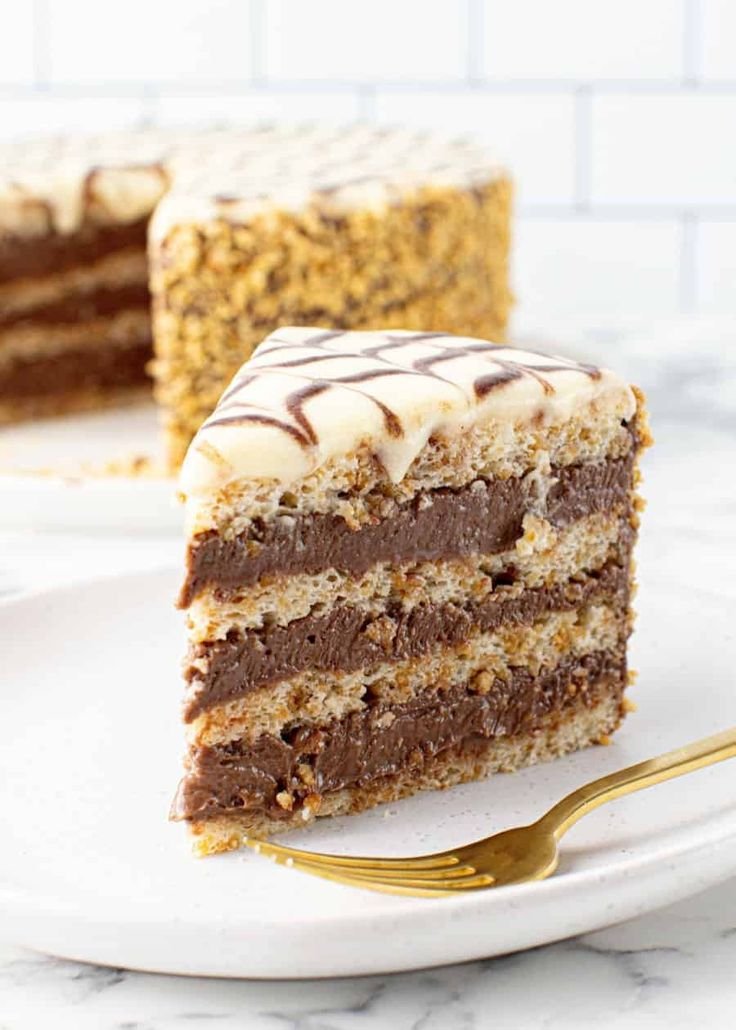
Spread a thin, even layer of chocolate buttercream over the surface. Add the second sponge layer and repeat the process until five sponge layers have been stacked with buttercream between them.
Use the remaining buttercream to coat the sides of the cake, smoothing it with an offset spatula.
Refrigerate the cake while you prepare the caramel topping.
Step 7: Prepare the Caramel
Place the reserved sponge layer on a sheet of parchment paper lightly brushed with neutral oil or butter.
Put the sugar and optional water in a clean saucepan. Heat over medium heat, allowing the sugar to dissolve and gradually turn a light amber color. Avoid stirring vigorously once the syrup begins to caramelize; gently swirl the pan if necessary.
Watch carefully because caramel can darken very quickly. Remove it from the heat as soon as it reaches a golden amber color.
Step 8: Coat and Cut the Top Layer
Immediately pour the hot caramel over the reserved sponge layer and spread it quickly into a thin, even coating.
Lightly oil a sharp knife or grease its blade with butter. Before the caramel hardens, score the coated sponge into 10–12 wedges.
Work carefully: hot caramel can cause serious burns. Do not touch the caramel or attempt to taste it while hot.
Allow the caramel to cool and harden completely.
Step 9: Decorate the Cake
Arrange the caramel-topped wedges over the cake, placing them slightly apart or at a gentle angle for the traditional presentation.
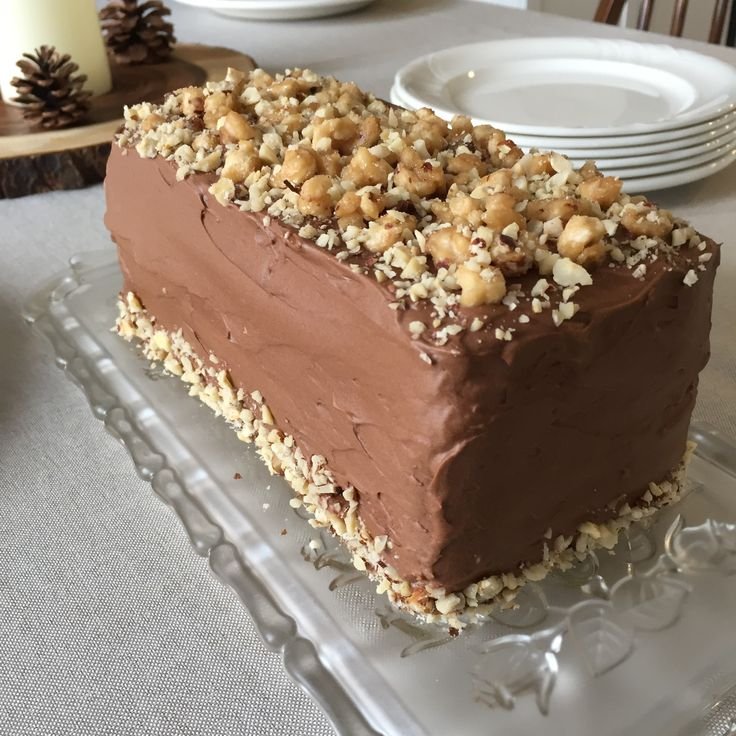
If desired, pipe small buttercream rosettes around the top and press finely chopped toasted hazelnuts onto the sides.
Refrigerate the cake until the buttercream is firm. For easier slicing, let it stand briefly at room temperature before serving.
Tips for a Beautiful Dobos Torte
Spread the sponge batter evenly. Thin, uniform layers make the finished cake look neat and help it stack evenly.
Do not overbake the sponge. Thin layers cook quickly and can dry out if left in the oven too long.
Cool the chocolate before adding it to the butter. Warm chocolate can melt the butter and cause the buttercream to become runny.
Keep the caramel layer thin. A thin caramel coating creates the traditional crisp finish without making the top unnecessarily difficult to cut.
Score the caramel immediately. Once the caramel hardens, cutting it becomes much more difficult and may shatter the sponge.
Use a sharp knife for serving. A warm, carefully wiped knife can help cut through the chilled buttercream and caramel topping more cleanly.
What Makes Dobos Torte Special?
Traditional Dobos Torte is recognized by its thin sponge layers, chocolate buttercream, and hard caramel top. The caramel is more than a decorative feature: it is part of the cake’s defining appearance and historical identity. The sides are often finished with ground nuts, while the caramel-topped sponge is cut into wedges before the sugar hardens. <Cite refs={[“turn432334search3″,”turn432334search4”]}/>
The cake became famous after its introduction in Budapest in 1885. Its careful construction and rich ingredients helped establish it as a classic of Hungarian confectionery.
Modern home recipes vary in their number of layers, the ingredients used in the buttercream, and the finishing decorations. This version keeps the central elements of the traditional dessert while using ingredients commonly available to home bakers.
How to Serve Hungarian Dobos Torte
Dobos Torte is rich, so relatively small slices are often enough. Serve it with:
Freshly brewed coffee
Black tea
Fresh berries
A light fruit salad
A small spoonful of unsweetened whipped cream
The slight bitterness of dark chocolate and caramel pairs particularly well with unsweetened coffee.
Storage
Because this version uses buttercream, store the finished cake covered in the refrigerator.
For the best texture, allow slices to sit briefly at room temperature before serving. The caramel topping may gradually soften as it absorbs moisture, so the cake is best enjoyed within a few days.
If your buttercream recipe contains eggs that are not fully cooked, use pasteurized eggs and follow appropriate food-safety guidance. Alternatively, choose a tested buttercream recipe that cooks the egg mixture safely.
Frequently Asked Questions
Is Dobos Torte difficult to make?
It takes time because the sponge layers are baked separately and the caramel must be handled quickly. However, careful preparation and allowing the cake to cool between stages make it manageable for a home baker.
How many layers should a traditional Dobos Torte have?
The classic cake is associated with six thin sponge layers, with chocolate buttercream between five of them and a caramel-coated layer on top. Variations exist, but the layered construction is an important part of its identity. <Cite refs={[“turn432334search3″,”turn432334search9”]}/>
Why did my buttercream split?
The chocolate and butter may have been at different temperatures, or the butter may have been too cold or too warm. Let the ingredients approach similar temperatures and beat the mixture gradually until smooth.
Why did the caramel harden before I could cut it?
Caramel cools quickly. Prepare your knife and topping layer before making the caramel, then pour and score it immediately. Never handle hot caramel directly.
Can I make Dobos Torte ahead of time?
Yes. You can bake the sponge layers and prepare the buttercream in advance. Assemble the cake when you are ready, and make the caramel topping close to assembly time for the best texture.
Final Thoughts
Hungarian Dobos Torte is a true celebration cake, combining delicate sponge, rich chocolate buttercream, and a crisp caramel finish. Its beautiful layers make it a striking dessert for birthdays, holidays, and special family gatherings.
Although it requires a little patience, each step contributes to the cake’s signature texture and appearance. Once you make it at home, you will understand why this Hungarian classic has remained popular for generations.
Save this traditional Hungarian cake recipe and share it with someone who loves chocolate desserts!