Which Egg Came From the Healthiest Chicken? Pick 1, 2, or 3 Before Reading the Answer!
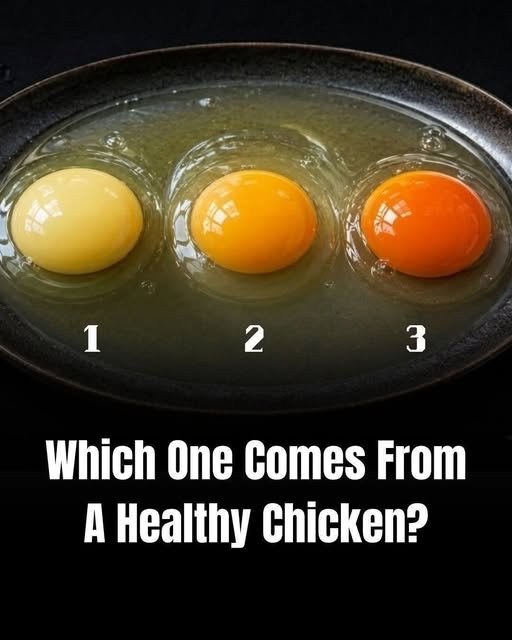
Look at the three yolks in the picture. One is pale yellow, one is golden, and one is deep orange.
So which egg came from the healthiest chicken?
The answer may surprise you: you cannot reliably determine a chicken’s health simply by looking at the yolk color.
🥚 Does a Darker Yolk Mean a Healthier Chicken?
Not necessarily.
The color of an egg yolk is influenced largely by the hen’s diet, particularly the pigments in the plants and grains she eats.
According to the USDA, hens consuming more yellow-orange plant pigments, such as those found in marigold petals and yellow corn, can produce darker yellow or orange yolks. A diet with fewer of these pigments can result in a paler yolk. Ask USDA
So, in the photo:
#1 — Pale yellow: can be completely normal.
#2 — Golden yellow: also completely normal.
#3 — Deep orange: can also be completely normal.
None of these colors proves that the chicken was healthier than the others.
🌽 What Actually Determines Yolk Color?
Several factors can influence yolk appearance, but diet is one of the major factors.
For example, feeds containing more carotenoid pigments can produce a more intensely colored yolk. This is why eggs from different farms—or even different seasons—can have noticeably different yolk colors.
A darker yolk can therefore tell you something about what the hen was eating, but it isn’t a reliable health test for the bird.
💛 Is an Orange Yolk More Nutritious?
A darker yolk shouldn’t automatically be interpreted as “healthier.”
Eggs naturally provide important nutrients, including protein, fats, vitamins and minerals. But yolk color by itself isn’t a reliable way to compare their overall nutritional value.
The USDA similarly notes that even brown versus white eggshell color doesn’t indicate a significant nutritional difference; shell color is primarily determined by the breed of the hen. Ask USDA
🔎 What Should You Look For Instead?
If you’re buying eggs, don’t judge quality solely by how orange the yolk looks.
Pay attention to:
Clean, intact shells
Proper refrigeration and storage
Freshness
No unusual odor
No cracked shells
A reputable source
And remember that appearance alone isn’t a complete food-safety test. USDA guidance notes that egg appearance can vary for many normal reasons. Ask USDA
🍳 What About the Egg White?
The egg white can also provide clues about freshness.
According to the USDA, a cloudy egg white can indicate a very fresh egg, while a clearer white generally indicates that the egg is older. Ask USDA
That doesn’t mean a clear white automatically means the egg is unsafe—it can simply reflect normal aging.
⚠️ Don’t Let Viral Egg Pictures Fool You
Social-media posts often turn a simple visual difference into a definitive health claim:
“The darkest yolk came from the healthiest chicken.”
That’s not something you can establish from yolk color alone.
A hen’s health depends on many factors, including nutrition, disease status, environment, genetics and management. Yolk color is primarily a visible characteristic influenced by the hen’s diet.
So, which one is the healthiest?
There is no scientifically reliable answer: #1, #2 and #3 could all come from healthy chickens.
The deep orange yolk (#3) is not automatically healthier simply because it looks more vibrant.
🥚 The Bottom Line
Yolk color is not a health score for the chicken.
A pale yellow, golden, or orange yolk can all be normal. If you want to know what makes an egg nutritious and safe, look beyond its color—consider how the eggs were produced, stored and handled.
This article is for educational purposes and is not intended to make health or food-safety judgments based solely on egg appearance.