Why Do I Have So Much Ear Hair? Causes, Age Effects, and Safe Removal Options
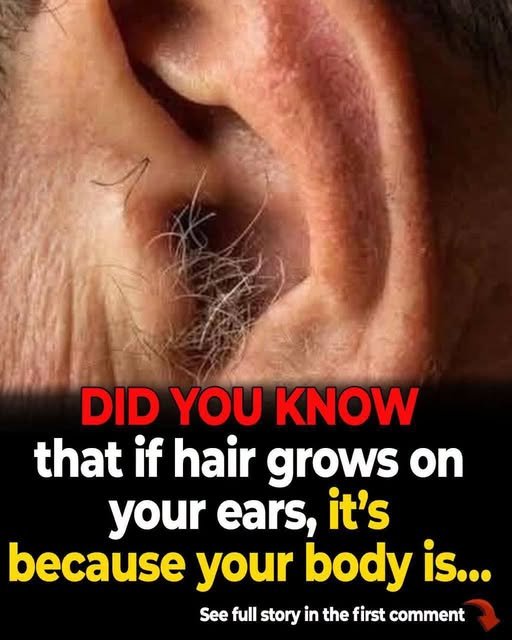
Have you noticed thicker or longer hairs appearing around your ears as you’ve gotten older?
It can be surprising, especially if you never had noticeable ear hair when you were younger. Viral posts sometimes suggest that ear hair is a warning sign of a hidden health problem.
In most cases, that’s not what it means.
Thicker hairs on the ears are a common age-related change, particularly in older adults. Manuels Merck
Why Does Ear Hair Get Thicker With Age?
Hair growth is influenced by genetics, age and hormones. As we age, some hair follicles can produce thicker, more noticeable terminal hairs in places where the hair was previously very fine.
Medical references specifically describe thick terminal hairs on the ears as a normal finding that can occur with aging. Manuels Merck
So if you suddenly notice a few long hairs sticking out of your ears in your 50s, 60s or later, it doesn’t automatically mean your body is “warning” you about a disease.
Is Ear Hair Caused by High Testosterone?
Not necessarily.
Androgens such as testosterone and DHT influence hair growth, but the response of individual hair follicles varies greatly from person to person. Genetics and the sensitivity of the follicles also play important roles. Manuels Merck
Therefore, you cannot determine someone’s testosterone level simply by looking at their ear hair.
Can Women Have Ear Hair?
Absolutely.
Although noticeable terminal hair is often discussed in relation to men, women can also develop increased facial or body hair as they age or because of genetics and hormonal changes.
A sudden increase in coarse facial or body hair in a woman—particularly when accompanied by irregular periods, acne, scalp hair loss or other hormonal symptoms—can sometimes warrant medical evaluation because excessive androgen activity can have several causes. Manuels Merck
Does Ear Hair Affect Hearing?
The hair around the outer ear generally isn’t a major problem.
However, having a lot of ear hair can be associated with a greater chance of earwax blockage, particularly in people who already produce excess wax or use earbuds, hearing aids or cotton swabs. Cleveland Clinic
If you develop muffled hearing, ear fullness, ringing, pain or discharge, it’s better to have the ear examined rather than trying to dig inside it.
What’s the Safest Way to Remove Ear Hair?
If the hair bothers you cosmetically, several options are available.
✂️ 1. Carefully Trim It
A small electric ear/nose trimmer can be used to shorten hair that is visible around the outer ear.
Avoid pushing the device deeply into the ear canal.
🪒 2. Carefully Shave Visible Hair
Hair that grows on the outer surface of the ear can be trimmed or shaved carefully.
However, don’t try to remove every hair inside the ear canal.
Ear hair and earwax are part of the ear’s natural protective system.
🔦 3. Professional Removal
If you have extensive hair growth that bothers you, a dermatologist or qualified professional can discuss longer-lasting cosmetic options.
What You Shouldn’t Do
Avoid inserting sharp objects, tweezers or other tools deeply into the ear canal.
And don’t use cotton swabs to aggressively clean inside the ear. Manipulating the canal can push wax deeper or injure the delicate skin. Earwax problems can sometimes require professional removal. Cleveland Clinic
When Should Excess Hair Be Checked?
Ear hair alone usually isn’t a reason for concern.
Consider talking with a healthcare professional if you experience sudden, unusually rapid hair growth together with other changes such as:
Sudden widespread increase in coarse body hair
Significant hormonal changes
New severe acne
Irregular menstrual cycles
Deepening of the voice
Other unexplained physical changes
These symptoms can sometimes point to hormonal or other medical causes and deserve proper evaluation rather than relying on an internet diagnosis. Manuels Merck
The Bottom Line
Ear hair is usually a normal part of aging—not a secret warning from your body.
Genetics, age and hormones all influence how much hair grows around the ears. For many older adults, thicker ear hair is simply another normal physical change that comes with getting older. Manuels Merck
If you don’t like the appearance, carefully trimming the outer ear is usually all that’s necessary.
And remember: more ear hair does not automatically mean you have high testosterone, poor health, or a hidden disease.