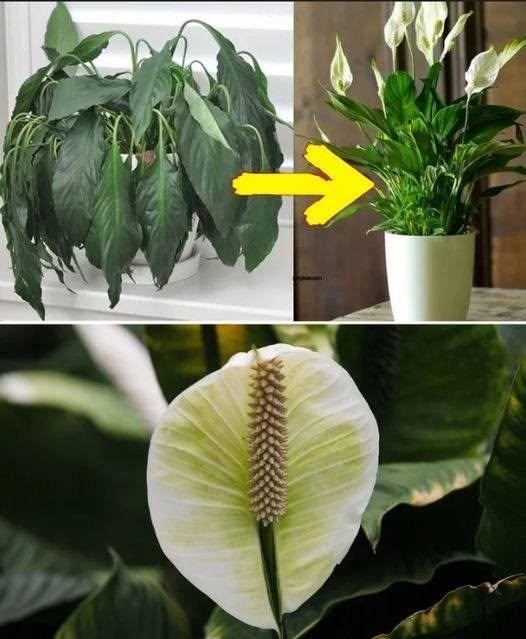
🌿 Peace Lily Care: Can One Ingredient Keep It Blooming for Years?
Peace lilies are popular houseplants because of their elegant leaves and beautiful white flowers. But if you’ve seen posts claiming that one mystery powder will make a peace lily bloom for 10 years in a row, it’s worth looking beyond the viral headline.
There is no single ingredient that guarantees continuous flowering for 10 years. Peace lilies (Spathiphyllum) can live for many years indoors when their basic growing conditions are right, and occasional fertilizer can support healthy growth and flowering.
🌱 What Is the Powder in the Viral Photo?
The image appears to show a powdered plant amendment or fertilizer, but the exact substance cannot be reliably identified from the photograph.
It’s important not to add an unknown powder directly to your plant’s soil. Different products have very different nutrient concentrations, and too much fertilizer can damage roots and cause brown leaf tips or other problems.
🌸 What Actually Helps a Peace Lily Bloom?
☀️ 1. Give It Bright, Indirect Light
Peace lilies tolerate relatively low light, but bright, indirect light generally provides better conditions for flowering.
Avoid intense direct afternoon sunlight, which can scorch the leaves.
💧 2. Water Correctly
Peace lilies prefer evenly moist soil but don’t like sitting in constantly waterlogged soil.
Water when the upper portion of the soil has begun to dry, then allow excess water to drain away.
A pot with drainage holes is important.
🌿 3. Fertilize Occasionally
Peace lilies can benefit from a balanced houseplant fertilizer during active growth.
Follow the product’s label instructions rather than adding large quantities of fertilizer. More fertilizer does not mean more flowers.
Overfertilizing can cause salt buildup in the soil and damage the roots.
🌡️ 4. Keep Conditions Stable
Peace lilies generally do best in a warm indoor environment away from cold drafts, heating vents, and sudden temperature changes.
🪴 5. Repot When Necessary
If roots have filled the container or water runs through the pot unusually quickly, the plant may benefit from being moved into a slightly larger container.
Don’t automatically choose a huge pot—the soil can remain wet for too long around a small root system.
🌼 Why Is My Peace Lily Growing Leaves but Not Flowers?
This is a very common question.
One of the biggest factors is light. A peace lily can survive in low light while producing plenty of green leaves but few flowers.
Other possibilities include:
Insufficient light
Incorrect watering
Nutrient imbalance
Root problems
A pot that is too large
Environmental stress
Normal seasonal variation
So if your peace lily looks healthy but isn’t flowering, moving it to a brighter location with indirect light may be more useful than experimenting with homemade powders.
⚠️ Be Careful With Homemade Fertilizers
Social-media recipes sometimes recommend milk powder, baking soda, coffee grounds, eggshell powder, or other kitchen ingredients.
These aren’t automatically appropriate for every houseplant. Some can alter the soil, contribute nutrients in unpredictable amounts, or encourage unpleasant odors and pests.
If you want to fertilize your peace lily, a commercial fertilizer formulated for houseplants gives you much better control over what nutrients you’re adding.
🐾 Important If You Have Pets
Peace lilies contain calcium oxalate crystals and can cause irritation if chewed or eaten. Keep them away from pets and young children who might try to chew the leaves. If a pet has eaten part of the plant and develops symptoms, contact a veterinarian.
🌸 The Bottom Line
There is no secret ingredient that can guarantee a peace lily will bloom continuously for 10 years. Consistent light, appropriate watering, good drainage, suitable temperatures, and moderate fertilization are much more important for keeping a peace lily healthy over the long term.
And if you don’t know exactly what the powder in a viral gardening photo is, don’t put it on your plant until you’ve identified it.
With the right care, however, a peace lily can remain a beautiful houseplant for many years. 🌿🤍