Don’t Get Fooled by Supermarket Meat: What the Color and Appearance of Ground Beef Really Mean
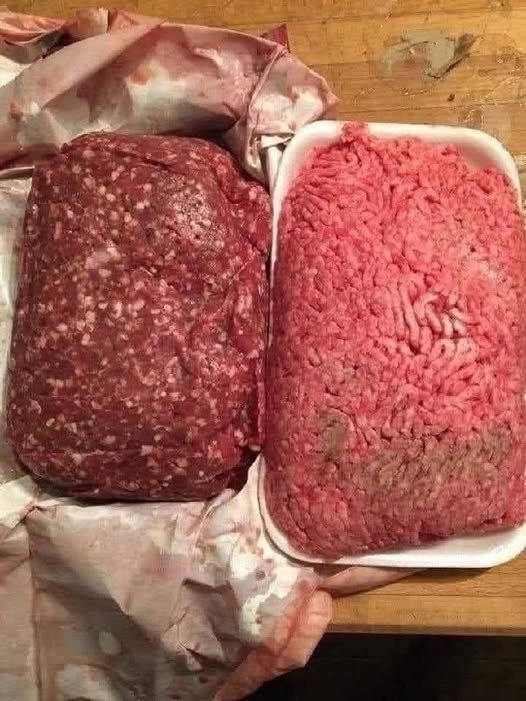
Have you ever looked at two packages of ground meat and noticed that one is bright pink while another is much darker and more reddish? Photos like the one circulating online often come with alarming captions suggesting that supermarkets are secretly selling meat from another animal.
The appearance of ground meat alone cannot tell you what animal it came from. Color, fat content, oxygen exposure, packaging, and storage conditions can all make ground meat look dramatically different.
Why Does Ground Beef Have Different Colors?
Fresh meat contains a protein called myoglobin, which contributes to its color. When meat is exposed to oxygen, myoglobin can form a bright-red pigment, making the surface of ground beef appear red or pink.
Inside a tightly packed package, where there is less oxygen, the meat can look darker, purplish-red or brownish. Once exposed to air, the color can change again.
This means that different colors do not automatically indicate different types of meat.
Why Is One Package Darker Than Another?
Several factors can influence the appearance of ground beef:
Oxygen Exposure
Ground beef exposed to oxygen can develop a brighter red surface, while meat with limited oxygen exposure may appear darker.
Fat Content
Ground beef with more visible fat can have a different texture and appearance from very lean ground beef.
Grinding
The way meat is ground and packed can affect how it looks, including how much air is incorporated into the product.
Storage
Temperature, packaging, and storage time can all influence the color and quality of meat.
Does Darker Meat Mean It’s Spoiled?
Not necessarily.
Color alone isn’t a reliable way to determine whether ground beef is safe to eat. A change toward brown inside the package can occur because of reduced oxygen exposure.
However, if ground beef has an unpleasant or unusual odor, a sticky or slimy texture, damaged packaging, or has been stored improperly, it should not be eaten simply because the color looks normal.
When in doubt, follow the package’s storage instructions and use a food thermometer when cooking.
What About Claims That Supermarkets Are Selling Horse Meat?
A photograph showing two different-looking packages of ground meat does not establish that one contains horse meat or another undisclosed animal.
The only reliable way to determine the ingredients of packaged ground meat is through the product labeling, traceability information, or appropriate laboratory testing—not color or appearance.
If you suspect that a product is incorrectly labeled, keep the packaging and receipt and contact the retailer or the relevant food-safety authority rather than relying on a viral social-media claim.
How Should Ground Beef Be Cooked?
Ground beef should be cooked thoroughly because grinding can distribute bacteria from the surface throughout the meat.
For safety, the U.S. Department of Agriculture recommends cooking ground beef to an internal temperature of 160°F (71°C), measured with a food thermometer.
Don’t rely solely on whether the meat has turned brown or gray in the center.
What Should You Look for When Buying Ground Beef?
When shopping for ground beef:
Check that the package is properly sealed.
Look at the use-by or sell-by information where applicable.
Keep the meat refrigerated.
Avoid packages that are leaking or damaged.
Take raw meat home promptly and refrigerate or freeze it.
Follow the cooking and storage instructions on the package.
The Bottom Line
A package of ground meat that looks darker, redder, or pinker than another isn’t proof that supermarkets are selling meat from a different animal. Meat color can change naturally because of oxygen exposure, packaging, fat content, and other factors.
Instead of judging meat by a viral photograph, check the label, storage conditions, freshness indicators, and cooking temperature.
And remember: color alone cannot tell you the species of meat.