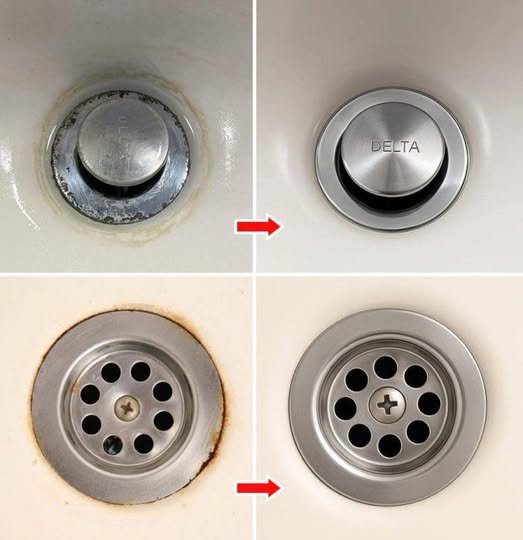
How to Remove the Dark Circle Around Your Faucet and Drain
That dark ring around a bathroom faucet, sink drain, or metal fixture can make an otherwise clean sink look old and dirty.
The good news is that you can often remove it without replacing the fixture. The key is figuring out whether you’re dealing with mineral buildup, soap residue, grime, or rust.
🧽 What Causes the Dark Ring?
The discoloration around metal fixtures is commonly caused by a combination of:
Hard-water mineral deposits
Soap and toothpaste residue
Dirt and grime
Moisture that remains around the fixture
Rust or corrosion around older metal parts
Mold or mildew in areas that stay constantly damp
If you live in an area with hard water, mineral deposits can build up particularly quickly.
The Easy Cleaning Method
What You’ll Need
White vinegar
Baking soda
Dish soap
An old toothbrush or soft brush
Microfiber cloth
Warm water
Step 1: Clean the Area
Start by wiping away loose dirt and residue with warm water and a little dish soap.
Dry the area afterward so you can clearly see the remaining buildup.
Step 2: Try White Vinegar
For mineral deposits, soak a cloth or paper towel in white vinegar and place it around the affected area.
Leave it for approximately 15–30 minutes, then gently scrub with a soft toothbrush.
Vinegar’s acidity can help dissolve mineral deposits such as limescale.
Important: Don’t use vinegar on every surface. Natural stone such as marble, limestone, and some other acid-sensitive materials can be damaged by acidic cleaners.
Step 3: For Stubborn Residue
Make a mild paste from baking soda and a small amount of water.
Apply it gently with a soft cloth or toothbrush and scrub lightly.
Don’t use aggressive abrasives or steel wool because they can scratch the finish of the fixture.
Step 4: Rinse and Dry
Rinse everything thoroughly with clean water and dry the surface completely with a microfiber cloth.
Drying is important because leaving water around the fixture encourages another layer of mineral buildup.
What If It’s Actually Rust?
If the brown or orange discoloration is rust, vinegar may help with light surface rust, but heavily corroded metal may require a cleaner specifically designed for rust.
If the metal finish itself has deteriorated, cleaning may not completely restore the original appearance.
In that situation, replacing the drain or trim piece may be the most practical solution.
🚫 Avoid This Common Mistake
Don’t automatically reach for bleach.
Bleach isn’t the best solution for mineral deposits, and never mix bleach with vinegar or other acidic cleaners because dangerous chlorine gas can be produced.
Also avoid using harsh abrasive powders on polished chrome or stainless-steel finishes.
How to Keep the Ring From Coming Back
Once you’ve cleaned the area, prevention is much easier:
Wipe around the faucet after cleaning the sink.
Don’t allow water to sit around the drain.
Clean mineral deposits regularly instead of letting them accumulate.
Use a soft microfiber cloth for routine cleaning.
Fix leaking faucets or drains promptly.
The Bottom Line
That ugly dark circle isn’t necessarily a sign that your sink is permanently damaged. Mineral deposits, soap residue, moisture, and rust can all create discoloration around fixtures.
Start with gentle cleaning, use vinegar cautiously for hard-water buildup, and avoid abrasive materials that can damage the finish.
With regular drying and cleaning, your faucet and drain can stay much cleaner for longer.