Mix Baby Oil and Cloves: Does This Really Work as an Insect Repellent?
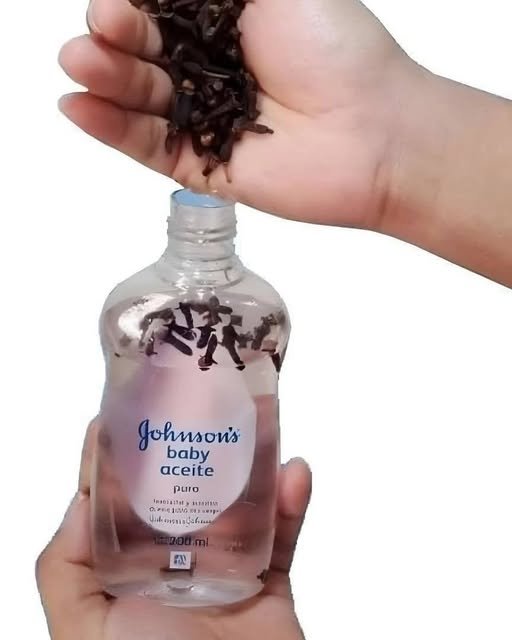
A popular home remedy suggests soaking cloves in baby oil and using the mixture as a natural way to keep insects away. The idea isn’t completely baseless: cloves contain eugenol, a compound that has demonstrated insect-repellent activity in laboratory studies. (PubMed Central (PMC))
However, the viral claim that this simple mixture will reliably replace commercial insect repellents is too strong.
Why cloves may repel insects
Clove oil contains eugenol, which appears to be one of the main compounds responsible for its repellent effect. Studies have found that clove oil can repel mosquitoes under controlled conditions, although effectiveness depends heavily on concentration and how the product is formulated. (PubMed Central (PMC))
That means the strong smell of cloves may make an area less attractive to some insects.
What about mixing cloves with baby oil?
Baby oil can act as a carrier for compounds extracted from cloves, but simply putting whole cloves into baby oil doesn’t guarantee that enough active eugenol will be extracted to provide reliable protection.
In fact, research examining a popular homemade clove-and-baby-oil recipe found that the preparation, as traditionally advertised, was ineffective against mosquitoes at the tested formulation. More concentrated preparations showed some repellency but performed less well than DEET. (PubMed Central (PMC))
So this should be viewed as a home experiment rather than a proven mosquito-control method.
A word of caution about putting it on your skin
Don’t assume that because something is “natural” it’s automatically safe for skin.
Clove oil and concentrated eugenol can irritate the skin, and essential oils can cause allergic reactions in some people. Poison Control specifically cautions against using undiluted plant essential oils that aren’t formulated as insect repellents. (Poison Control)
If you’re looking for protection against mosquitoes that can transmit disease, a properly formulated and labeled insect repellent is a more reliable option.
The bottom line
Cloves contain compounds with genuine insect-repellent properties, but the viral baby-oil-and-whole-clove recipe isn’t a reliably proven insect repellent. Research suggests clove-based formulations can work under certain conditions, but concentration and formulation matter greatly. (PubMed Central (PMC))
For everyday mosquito protection, don’t rely on a homemade mixture alone—especially in areas where mosquitoes can transmit disease.